
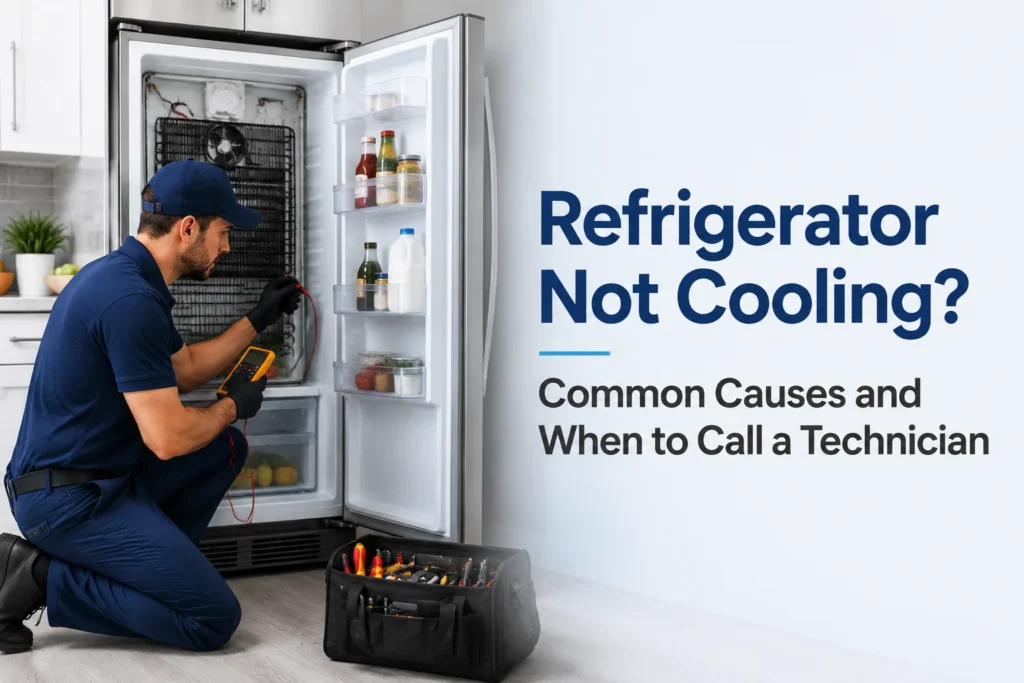
A refrigerator that isn’t cooling properly can quickly turn from a minor inconvenience into a major household emergency. When your refrigerator stops maintaining the correct temperature, food can spoil, groceries can be wasted, and your family may be left scrambling for solutions.
Whether your refrigerator is running but not cooling, your freezer is warm, or certain compartments aren’t maintaining temperature, understanding the possible causes can help you determine whether the issue requires simple troubleshooting or professional refrigerator repair.
In this guide, we’ll explore the most common reasons a refrigerator isn’t cooling, warning signs to watch for, and when it’s time to call a professional appliance repair technician.
Why Is My Refrigerator Running but Not Cooling?
One of the most common complaints homeowners have is that their refrigerator appears to be operating normally, yet the interior remains warm.
You may hear the fan running, see interior lights working, and even notice the compressor turning on. However, if the refrigerator isn’t reaching the proper temperature, one or more critical cooling components may have failed.
Common causes include:
Dirty condenser coils
Faulty evaporator fan motor
Defective condenser fan
Malfunctioning thermostat
Damaged door seals
Frost buildup
Compressor problems
Refrigerant system issues
Control board failures
Identifying the root cause early can help prevent expensive repairs and food loss.
1. Dirty Condenser Coils
Dirty condenser coils are one of the most common causes of refrigerator cooling problems.
The condenser coils release heat removed from inside the refrigerator. Over time, dust, pet hair, and debris accumulate on these coils, reducing their efficiency.
Symptoms of dirty condenser coils:
Refrigerator feels warm
Compressor runs continuously
Higher energy bills
Reduced cooling performance
Cleaning condenser coils every six months can improve efficiency and extend appliance lifespan.
SEO Keywords:
refrigerator not cooling, refrigerator repair, appliance repair service, refrigerator maintenance
2. Faulty Evaporator Fan Motor
The evaporator fan circulates cold air throughout the refrigerator and freezer compartments.
If the fan motor fails, cold air cannot move properly, causing temperature inconsistencies.
Common signs:
Freezer cold but refrigerator warm
Weak airflow inside refrigerator
Strange noises from freezer section
Uneven cooling
A professional appliance technician can quickly diagnose and replace a faulty evaporator fan motor.
3. Condenser Fan Problems
The condenser fan helps cool the compressor and condenser coils.
If this fan stops working, the refrigerator may struggle to remove heat efficiently.
Warning signs:
Excessive heat near refrigerator
Loud fan noises
Compressor overheating
Poor cooling performance
Replacing a defective condenser fan often restores normal cooling.
4. Refrigerator Door Seal Damage
A damaged or worn refrigerator gasket allows warm air to enter continuously.
Even small gaps in the door seal can significantly impact cooling performance.
Signs of a bad door seal:
Condensation around doors
Frost buildup
Refrigerator running constantly
Increased energy consumption
Replacing door gaskets is often a simple and cost-effective repair.
5. Thermostat Malfunction
The temperature control thermostat regulates cooling cycles.
If it becomes defective, the refrigerator may not signal the compressor to activate properly.
Symptoms include:
Refrigerator too warm
Refrigerator too cold
Inconsistent temperatures
Compressor not cycling correctly
Professional refrigerator repair technicians can test thermostat functionality and recommend appropriate repairs.
6. Frost Buildup on Evaporator Coils
Modern refrigerators rely on automatic defrost systems.
When components such as the defrost heater, defrost thermostat, or control board fail, frost can accumulate on evaporator coils.
This frost blocks airflow and prevents effective cooling.
Common symptoms:
Refrigerator warm
Freezer temperature fluctuating
Ice buildup inside freezer
Reduced airflow
Defrost system repairs are among the most common refrigerator repair services.
7. Compressor Problems
The compressor is often called the heart of the refrigerator.
It circulates refrigerant throughout the cooling system and is essential for proper operation.
Signs of compressor issues:
Refrigerator not cooling at all
Clicking noises
Constant running
Compressor extremely hot
Compressor repairs require professional diagnosis and specialized tools.
8. Refrigerant Leak
Refrigerant absorbs and transfers heat during the cooling process.
If a leak develops, the refrigerator may lose its ability to maintain safe temperatures.
Symptoms include:
Gradual cooling loss
Compressor running continuously
Warm freezer compartment
Poor overall cooling
Refrigerant repairs should only be performed by trained appliance repair professionals.
9. Control Board Failure
Modern refrigerators rely heavily on electronic control systems.
A faulty control board can disrupt communication between cooling components.
Warning signs:
Random error codes
Inconsistent cooling
Components not activating
Intermittent operation
Advanced diagnostic equipment is often required to identify control board issues accurately.
Warning Signs Your Refrigerator Needs Immediate Repair
You should schedule professional refrigerator repair if you notice:
Food spoiling quickly
Refrigerator temperature above 40°F
Freezer temperature above 0°F
Water leaks
Loud buzzing or clicking sounds
Frost accumulation
Compressor running constantly
Burning odors
Ignoring these symptoms can result in more extensive and expensive repairs.
Can You Fix a Refrigerator That Isn’t Cooling Yourself?
Homeowners can safely perform a few basic troubleshooting steps:
Check Temperature Settings
Verify that temperature controls haven’t been accidentally changed.
Recommended settings:
Refrigerator: 37°F to 40°F
Freezer: 0°F
Clean Condenser Coils
Vacuum or brush away accumulated dust and debris.
Inspect Door Seals
Check for cracks, tears, or gaps.
Ensure Proper Airflow
Avoid overpacking food items, which can restrict airflow.
However, issues involving electrical components, compressors, refrigerant systems, or control boards should be left to qualified appliance repair technicians.
Why Professional Refrigerator Repair Matters
Professional refrigerator repair provides several important benefits:
Accurate Diagnosis
Technicians identify the true source of cooling issues rather than guessing.
Safety
Refrigerators contain electrical systems and refrigerant components that require specialized handling.
Faster Repairs
Experienced technicians often complete repairs during a single visit.
Long-Term Savings
Timely repairs can prevent major component failures and extend appliance lifespan.
Common Refrigerator Brands We Repair
Professional appliance repair services frequently work on:
Whirlpool Refrigerator Repair
GE Refrigerator Repair
Samsung Refrigerator Repair
LG Refrigerator Repair
Frigidaire Refrigerator Repair
KitchenAid Refrigerator Repair
Maytag Refrigerator Repair
Bosch Refrigerator Repair
Electrolux Refrigerator Repair
Viking Refrigerator Repair
Preventing Future Refrigerator Cooling Problems
Regular maintenance can help avoid breakdowns and improve performance.
Helpful maintenance tips include:
Clean condenser coils every six months
Inspect door seals regularly
Avoid blocking air vents
Keep refrigerator properly stocked
Schedule professional inspections when issues arise
Preventive maintenance often costs far less than major repairs or appliance replacement.
When Should You Call a Refrigerator Repair Technician?
If your refrigerator remains warm after basic troubleshooting, it’s time to call a professional.
Prompt service is especially important because refrigeration issues can quickly lead to food spoilage and potential health concerns.
A trained appliance repair technician can diagnose cooling problems, recommend cost-effective solutions, and restore proper operation before further damage occurs.
Final Thoughts
A refrigerator not cooling properly can result from several issues, including dirty condenser coils, fan motor failures, thermostat problems, frost buildup, compressor malfunctions, and refrigerant leaks.
While some minor maintenance tasks can be handled by homeowners, many cooling issues require professional diagnosis and repair. Acting quickly when cooling problems first appear can prevent food loss, reduce repair costs, and extend the lifespan of your appliance.
If your refrigerator isn’t cooling, don’t wait for the problem to get worse. Professional refrigerator repair services can identify the cause, restore reliable performance, and help keep your kitchen running smoothly.