
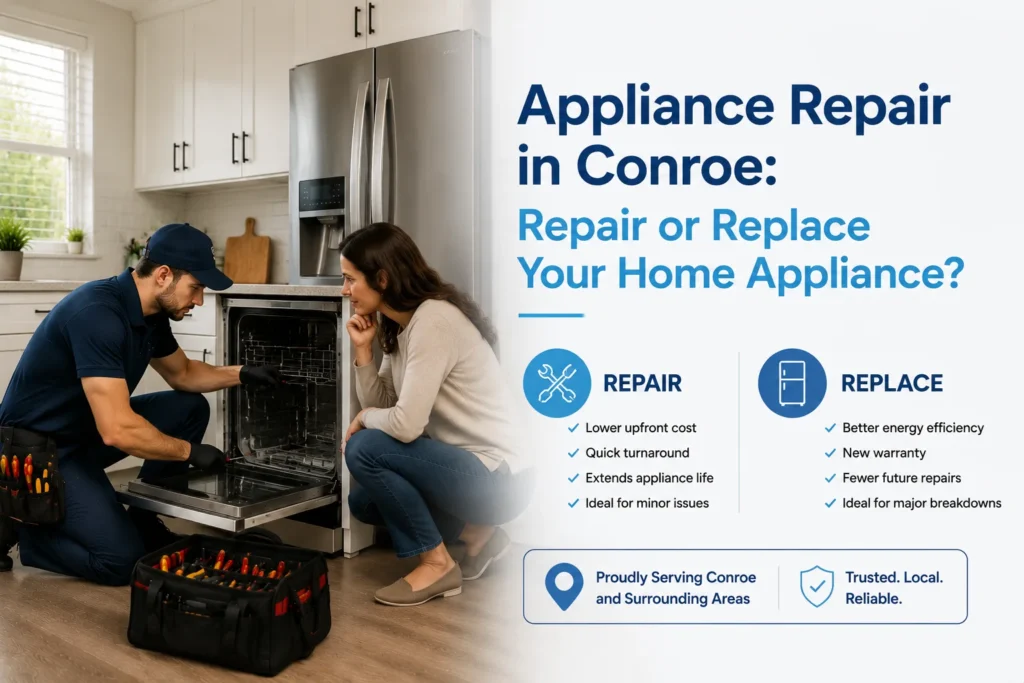
When a home appliance stops working, homeowners in Conroe often face a difficult decision: should they repair the appliance or replace it entirely? Whether it’s a refrigerator that won’t cool, a washer that won’t spin, a dryer that won’t heat, or an oven that won’t turn on, appliance problems can disrupt your daily routine and create unexpected expenses.
Understanding when repair makes sense and when replacement is the smarter investment can save you hundreds—or even thousands—of dollars. In this guide, we’ll help Conroe homeowners make informed decisions about their household appliances and explain why professional appliance repair services are often the most cost-effective solution.
Why Appliances Break Down
Modern appliances are built to last, but even the best brands experience wear and tear over time. Daily use, electrical issues, improper maintenance, and aging components can all contribute to appliance failure.
Some of the most common appliance problems include:
Refrigerator not cooling properly
Ice maker not working
Washer not draining
Dryer not heating
Dishwasher not cleaning dishes effectively
Oven not reaching the correct temperature
Range burners not igniting
Microwave not heating food
Many of these issues can be repaired quickly by an experienced appliance technician, allowing homeowners to avoid the cost of purchasing a new appliance.
The 50% Rule: A Simple Repair vs. Replace Guideline
One of the most common rules used in the appliance repair industry is the 50% Rule.
If the repair cost is less than 50% of the cost of a new appliance, repairing it is usually the better choice.
For example:
New refrigerator cost: $2,000
Repair estimate: $250
In this case, repair is typically the more economical option.
However, if a repair is expected to cost $1,200 or more, replacement may be the smarter long-term investment.
A professional appliance technician can help determine whether repair or replacement offers the best value for your specific situation.
Appliance Lifespan: How Long Should Appliances Last?
Knowing the average lifespan of your appliance can help you make a better decision.
Refrigerator
Average lifespan: 10–15 years
If your refrigerator is less than 10 years old and the repair is minor, repair is usually recommended.
Washing Machine
Average lifespan: 10–14 years
Most washer issues involving pumps, belts, or drain systems can be repaired affordably.
Dryer
Average lifespan: 10–13 years
Heating elements, thermostats, and thermal fuses are common repair items that typically cost much less than replacement.
Dishwasher
Average lifespan: 8–12 years
Problems such as clogged filters, faulty pumps, or broken door latches are often repairable.
Oven and Range
Average lifespan: 13–15 years
Many heating and ignition problems can be fixed quickly by a qualified technician.
If your appliance is nearing the end of its expected lifespan and requires multiple major repairs, replacement may make more financial sense.
Signs You Should Repair Your Appliance
In many situations, repair is the clear winner.
1. The Appliance Is Relatively New
If your appliance is only a few years old, replacing it is usually unnecessary. Most newer appliances can be restored to full functionality with professional repairs.
2. The Repair Is Minor
Common repairs include:
Replacing thermostats
Installing heating elements
Fixing door seals
Replacing switches
Repairing control boards
These repairs are typically far less expensive than purchasing a new appliance.
3. The Appliance Meets Your Needs
If your current appliance performs well and has the features you want, repairing it may be the best option.
4. Parts Are Readily Available
Popular brands such as Whirlpool, GE, Samsung, LG, Frigidaire, KitchenAid, Maytag, and Bosch often have readily available replacement parts, making repairs faster and more affordable.
Signs You Should Replace Your Appliance
There are situations where replacement is the better choice.
1. Frequent Breakdowns
If you find yourself calling for repairs multiple times each year, replacement may save money over time.
2. Major Component Failure
Some repairs involve expensive components such as:
Compressors
Sealed refrigeration systems
Main control boards
Transmission systems
When these parts fail on older appliances, replacement is often more practical.
3. High Energy Consumption
Older appliances typically consume more electricity and water than newer Energy Star-certified models.
Upgrading to a modern appliance may reduce utility bills and improve performance.
4. Safety Concerns
Electrical issues, gas leaks, or severe mechanical failures can pose safety risks. In some cases, replacement is the safest option.
Common Appliance Problems That Can Usually Be Repaired
Many homeowners assume an appliance must be replaced when a simple repair could solve the problem.
Refrigerator Problems
Not cooling
Water leaking
Ice maker malfunction
Loud noises
Frost buildup
Washer Problems
Won’t spin
Won’t drain
Excessive vibration
Water leaks
Error codes
Dryer Problems
Not heating
Long drying times
Drum not spinning
Burning smell
Unusual noises
Dishwasher Problems
Poor cleaning performance
Water not draining
Leaks
Door latch issues
Control panel problems
Oven Problems
Uneven cooking
Temperature fluctuations
Ignition failure
Broken heating elements
Most of these issues can be diagnosed and repaired by an experienced appliance repair technician.
Benefits of Professional Appliance Repair
Many homeowners attempt DIY appliance repairs after watching online videos. While some simple maintenance tasks are safe, professional repairs offer significant advantages.
Accurate Diagnosis
Professional technicians can quickly identify the root cause of the problem instead of replacing unnecessary parts.
Safety
Appliances involve electrical systems, gas connections, water lines, and moving components. Improper repairs can create serious safety hazards.
Faster Repairs
Experienced technicians often complete repairs during the same visit when replacement parts are available.
Warranty Protection
Many professional repairs include warranties on parts and labor, providing additional peace of mind.
Why Conroe Homeowners Choose Professional Appliance Repair
Conroe homeowners rely heavily on their household appliances every day. When an appliance fails, fast and reliable service is essential.
Professional appliance repair services provide:
Expert diagnosis
Same-day and next-day appointments
Genuine replacement parts
Experienced technicians
Cost-effective solutions
Reliable workmanship
Instead of guessing whether to repair or replace, homeowners can receive expert recommendations based on the appliance’s condition, age, and repair cost.
How Regular Maintenance Helps Avoid Costly Repairs
Preventive maintenance can significantly extend appliance lifespan.
Helpful maintenance tips include:
Clean refrigerator condenser coils regularly.
Inspect door seals for damage.
Clean dryer vents and lint filters after every use.
Avoid overloading washers and dryers.
Clean dishwasher filters monthly.
Schedule professional inspections when problems first appear.
Small maintenance tasks can prevent major breakdowns and reduce repair costs over time.
Final Thoughts
Deciding whether to repair or replace a home appliance depends on several factors, including age, repair cost, energy efficiency, and overall condition. In many cases, professional appliance repair is the most affordable and practical solution.
If your refrigerator, washer, dryer, dishwasher, oven, or other household appliance is experiencing problems, a professional technician can help you determine the best course of action.
For homeowners in Conroe, timely appliance repairs can restore convenience, extend appliance lifespan, and help avoid unnecessary replacement costs. Before investing in a brand-new appliance, consider scheduling a professional diagnosis—you may discover that a simple repair is all that’s needed to get your appliance working like new again.